
Engine readings
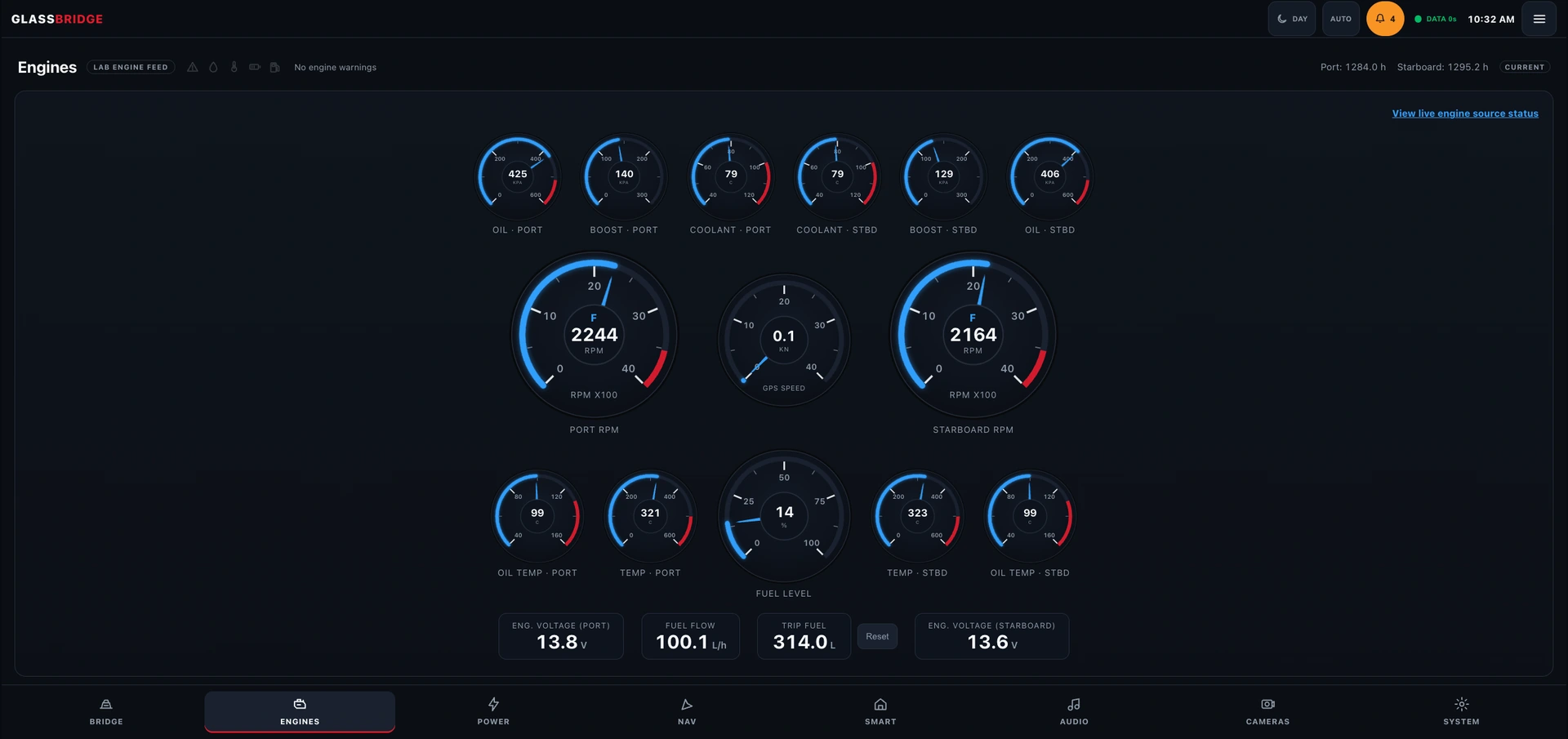
RPM, temperature, pressure, voltage, fuel and gearbox readings depend on available messages and installed gateways.
GlassBridge Aboard · Propulsion Intelligence
Bring available engine telemetry, history and diagnostic context into the yacht’s digital experience. Your engine controls stay exactly as they are.
Connected propulsion
RPM, temperature, pressure, voltage, fuel and gearbox readings depend on available messages and installed gateways.
Port and starboard views identify each data input and its installation test status. Similar operating conditions matter when comparing behaviour.
Store readings and alarm context without substituting simulated values for missing live data.
Installation scope
Connect supported engine readings and retain their history. Coverage follows the engine make, installed gateway and available messages.
Every engine finding uses the yacht’s installed and tested data inputs and operating readings. It shows the readings behind the advice for crew review.
Engineering detail
A finding keeps the readings and historical comparison behind it. Review cooling, lubrication, fuel, boost, transmission and electrical evidence.
Compare fuel use at relevant load, sea state and speed. Fuel profiles, reserve policy and data quality constrain any estimate. This is not route planning or safe-navigation guidance.
Stored time, distance and fuel details can inform voyage review when the installed equipment supports it.
Comparisons may highlight changing behaviour. A diagnostic fault is not established unless the OEM system supplies it or qualified service confirms it.
Data quality and missing inputs must remain visible. Readiness does not replace certified systems, watchkeeping or physical departure checks.
GlassBridge Cloud provides separately authenticated status visibility. Engine start and stop remain with original controls.
Marine interfaces
Supported NMEA 2000 interfaces can expose engine and vessel telemetry. On compatible Volvo Penta installations, the available values depend on the propulsion system, EVC generation and installed gateway.
No Volvo Penta partnership, certification, universal model support or propulsion control is claimed.
Review integration statusProduct demonstration
Arrange a live session around your equipment, display choices and onboard workflows.
Aboard your yacht
Start with the engine make, model and available NMEA interfaces. RPM, temperature, pressure, voltage, fuel flow and other readings depend on what each installed engine and gateway supplies.
Health comparisons need usable readings and history; efficiency and estimated range with reserve also depend on fuel and speed information. The installation review identifies available inputs, gaps and the operating context before interpreting a result.